Thoughts on Celiac Awareness Month – 2018

By Francie Kelley, Executive Director, Celiac Kids Connection

As Celiac Awareness Month (May) comes to a close it is time to reflect on the ways Celiac Kids Connection raised awareness. Awareness months are used to increase knowledge of an issue or celebrate something. This year we shared information about celiac disease and celebrated the positive impact this has had on some of our members’ lives.

We provided knowledge with the introduction of the Celiac Science section of our website. This section explores the basic biology behind celiac disease. We talk about the immune system, autoimmune diseases, gluten, the small intestine and much more. Please visit this section.

We provided a celiac disease fact sheet that could be shared to help friends, family members, classmates and co-workers better understand celiac disease and the gluten-free diet.

Working with our wonderful physicians and staff at Boston Children’s Hospital we provided information about Gluten Detective and dispelled some celiac disease myths. Gluten Detective is an at home test to determine if you have been exposed to gluten.

We celebrated positive experiences that would not have happened without celiac disease. One member shared about coming together as a family to advocate for their daughter at school. Another family shared about how the diet can be difficult but how happy they are that their daughter is so much healthier. And, one of our members, Kelly Farewell, told us how celiac disease actually led to a job offer. You can read Kelly’s story on our Facebook page.

We hope you will continue to spread Celiac Disease Awareness throughout the year.

Celiac Disease: Biology Basics

Celiac disease is defined as a chronic small intestinal immune-mediated enteropathy precipitated by exposure to dietary gluten in genetically predisposed individuals.1

This one sentence nicely captures the features of celiac disease—but what exactly does it mean?

In this section, we explore the biology of celiac disease. We will cover many questions that might come up while learning about celiac disease, including:

Medical researchers are always running new studies to better understand celiac disease. Please check back frequently for updates!

NEXT TOPIC: The immune system

References
  1. Ludvigsson JF, Leffler DA, Bai JC, et al. The Oslo definitions for coeliac disease and related terms. Gut. 2013;62(1):43-52.

Share this Post

GluTeen Free: Eating GF When Away From Home

Here are some tips and tricks for eating gluten free when you are at school, a friend’s house or away from home.

  1. Bring a toaster: Having a small, cheap, dedicated GF toaster to bring to a friend or family member’s home can be very convenient. GF breakfasts can be difficult when away from home, so bring your favorite GF toaster waffles or bread and a toaster to make dining in the morning less stressful. Our family also leaves dedicated GF toasters at places we frequently stay (grandparents, etc.). Cheap toasters can cost less than $20!
  2. Get microwave access at school: Even before we got diagnosed with Celiac, we were not into buying lunch. Fortunately, our middle and high schools have microwaves that can be used by students. Try asking your school administration for microwaves and hopefully they will grant your request due to your dietary restriction. You have so many more options when you can heat up leftovers.
  3. Find a reliable pizza place: Although this might seem a bit obvious, it is helpful to find a local or chain pizza place that offers GF Celiac-friendly pizza (hopefully a restaurant that delivers too). We mentioned Papa Gino’s, a great option, in our previous post. This restaurant can always be a go-to dinner suggestion when hanging out with friends, as they can order a regular pizza and you can order a GF one. **Reminder: Make sure these restaurants handle cross contamination well by using separate pizza cutters, toppings and pans.**
  4. Bring snacks: Always bring snacks or stockpile gluten-free goods at a place where you frequently stay (grandparents, friends house, etc.). If you do not feel safe about the food others are preparing for you, bring snacks so you can ensure that you do not go hungry.
  5. Bring your own meal: Unfortunately, you will sometimes be uncomfortable with the meals others are serving, even if they are trying very hard to accommodate your dietary restrictions. There is no shame in packing your own meal to avoid getting sick. We will always bring our own prepared food to pasta parties for our sports teams for instance, as we know there is a high risk for cross contamination if others prepared our pasta with colanders and pots that may have contained gluten.

The GluTeen Free blog posts are written by Sarah and Kaitlyn Roffman, twins with celiac disease who are currently juniors at Littleton High School.

Photo credits to Nick Youngson with attribution to Alpha Stock Images


Volunteer Appreciation Week

By Francie Kelley, Executive Director Celiac Kids Connection

It is Volunteer Appreciation Week, a time for us to take a moment to thank all the special people who make Celiac Kids Connection great. THANK YOU, it would be impossible to do all that we do without your hard work and dedication.

There is nothing that we do that does not require volunteer effort. We have volunteer families that act as Welcome Families, teens that contribute Green Ribbon Projects, and a family that prepares the Welcome Baskets. Our newsletter writers and editors are all volunteers. Our volunteer board oversees the group’s activities and with their families work hard at all of our events. We have over 10 teens acting as mentors for younger members. The staff at Boston Children’s Hospital is generous with their time supporting our activities. Members organize and host Small Group Gatherings in their area. Every event requires people to come early to set-up, stay late to clean-up and assist during the event.

To all of our magnificent volunteers, we are grateful for your contributions to Celiac Kids Connection.

Thank you everyone.

An Afternoon of Fun and Learning – Our March 2018 Educational Event

By Francie Kelley, Executive Director, Celiac Kids Connection

Fifty of our members gathered on March 4th to talk about eating away from home. We had a panel of teens that shared their real life experiences and how they stayed gluten free (GF). Our teens were all very informative and they made us laugh

Here are some of the tips they shared.

  • Go First – If there is a buffet type food spread or sundae bar, be sure to go through the food line first; before anyone mistakenly contaminates the GF items.
  • When it is your turn to bring snacks to school or sports etc., make a special GF treat and show people how good GF can be.
  • Advocate for yourself – This message was repeated over and over. The teens talked about advocating in restaurants, at school and with family.
  • Leave a snack (or snacks) with your teacher so you always have something available when there is food at school.
  • Talk to your teacher or teachers at the start of school year. This will allow them to make accommodations for you in advance when the lesson will contain a food component.
  • Always have a snack or bar with you. No matter where you go or what you do, you want to have food with you. Then no matter what happens, you will have something to eat.
  • Eat before you go places.
  • Remember it is your health. Do not let someone force you or guilt you into eating something that you do not believe is GF.
  • It’s Just Food – There is no reason to stress. Keep in mind, “It’s just food. There is so much more to life.

We want to thank our panelists who shared their wisdom with us. Thank you to Nate Couture, Jessica Delli Carpini, Emma Frank, Sonia Mulgund, Sam Orelowitz, Jessica Bargamian, Andrew Sears, Alexandra Weinsten and Brendan Weissel.

We want to thank the vendors who joined us from Veggie Fries and Eastern Marketing. Thank you to Canyon Bakehouse, Walkers Shortbread, Smart Flour, Kinnikinnick, Enjoy Life, San-J and Edward and Sons who sent delicious samples.

None of our events would be possible without the hard work of our volunteers. Thank you to our board members Debbie Ferguson, Nate Couture and Alexandra Weinsten. Also thank you to Nomi and Kayla Munroe, Evan Ferguson, Quentin Fennessy, Ilana Orelowitz, Amelia Wilson and April Sears.

What Happens In the Small Intestine?

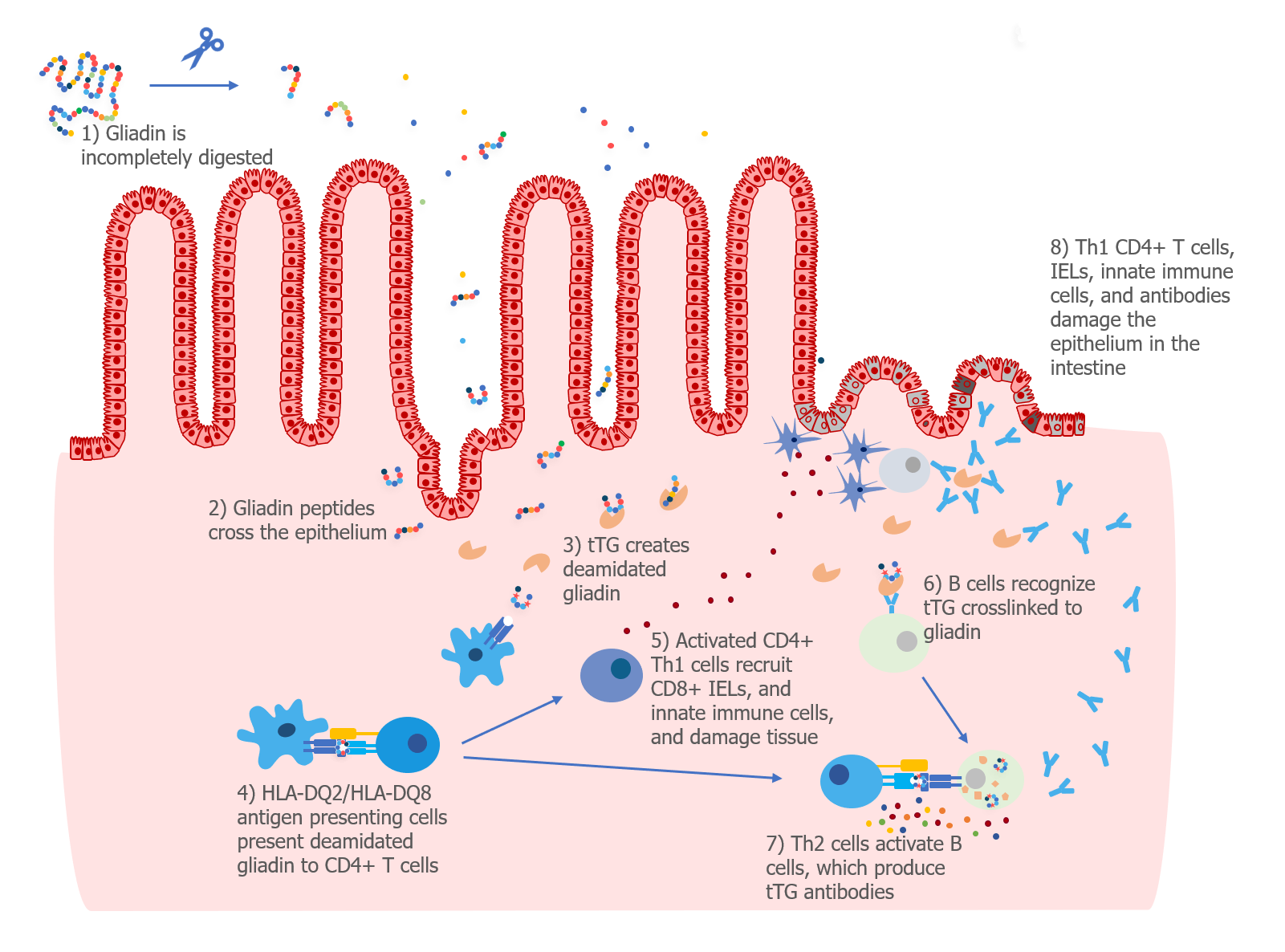
We have talked about the different types of immune cells, how they mistakenly recognize gluten, and how they make antibodies to tissue transglutaminase (tTG). But these things don’t happen in isolation—several things must happen at the same time for damage to the small intestine to occur.

First, gluten must be eaten and digested in the stomach and small intestine. Since gliadin is hard to digest, small peptides remain in the intestine. These peptides then cross the epithelium (cell layer) into the mucosa. Researchers are still trying to understand how this happens. Certain proteins, such as zonulin, may make the cell layer more permeable, so peptides can pass through to the underlying mucosal layer.1

Once the gliadin peptides get to the mucosal layer, they become modified by tissue transglutaminase (tTG) to fit better within the grooves of the MHC class II proteins on antigen presenting cells. Only antigen presenting cells with HLA-DQ2 or HLA-DQ8 haplotypes are able to present deamidated gliadin peptides and activate CD4+ T cells.

Once the CD4+ T cells are activated, they produce Th1 helper T cells, which make cytokines that recruit and activate other innate immune cells and CD8+ intraepithelial lymphocytes (IELs). Th17 cells, which play a role in many autoimmune diseases, are also involved in celiac disease. Activated Th2 cells may help to activate B cells that recognize tTG, resulting in the production of antibodies against tTG.

Together, the Th1 CD4+ T cells, IELs, innate immune cells, and antibodies cause inflammation and damage to the cells of the intestine.

Gluten is the trigger for this entire process—if it is removed from the diet, there is no immune response and the intestine is able to heal.

BACK TO MAIN PAGE                                                                                                                                     

REFERENCES
  1. Sturgeon C, Fasano A. Zonulin, a regulator of epithelial and endothelial barrier functions, and its involvement in chronic inflammatory diseases. Tissue Barriers. 2016;4(4):e1251384.
GLOSSARY

Antibodies – Y-shaped proteins that recognize foreign pathogens. Made by B cells. Also called immunoglobulins.

Antigen presenting cell – A specialized immune cell that presents peptides to CD4+ or CD8+ T cells. Peptides are presented by MHC I or MHC II proteins.

B cell – A type of adaptive immune cell. Also called B lymphocyte.

CD4 – A co-receptor on the surface of helper T cells.

CD8 – A co-receptor on the surface of cytotoxic T cells.

Cytokines – Small proteins that are made and released by immune cells. Allows cells to send signals and provide instructions to other cells.

Gliadin – One of the wheat proteins that forms gluten. Responsible for triggering an immune response in patients with celiac disease.

Gluten – A type of protein found in cereal grains. Wheat gluten is made of two proteins called gliadin and glutenin.

Haplotype – Variations in HLA genes that produce different MHC class II proteins.

Helper T cell – Adaptive CD4+ immune cell that produces cytokines when activated.

Immune cells – Specialized white blood cells (also called leukocytes) that fight infection.

Intraepithelial lymphocytes – Cytotoxic CD8+ T cells that reside in the intestine. Contribute to tissue damage in celiac disease.

MHC class I protein – Major histocompatibility complex class I protein. Found on the surface of normal cells. Presents peptides to CD8+ T cells.

MHC class II protein – Major histocompatibility complex class II protein. Found on the surface of antigen presenting cells. Presents peptides to CD4+ T cells.

Pathogens – Bacteria and viruses that can cause disease.

T cell – A type of adaptive immune cell. Also called T lymphocyte.

Tissue transglutaminase (tTG) – An enzyme that deamidates gliadin peptides causing them to be more immunogenic. Also the target of auto-antibodies in patients with celiac disease.

Share this Post

How Are B Cells Involved in Celiac Disease?

In the 1980s, researchers discovered that patients with celiac disease had high levels of antibodies that recognized gliadin (a protein in gluten) in their small intestine.1 Patients with celiac disease were also found to have auto-reactive antibodies—that is, antibodies that recognize normal “self” proteins.

Researchers developed a blood test that was able to detect IgA antibodies that recognized a type of tissue called endomysium.2 In 1997, Dr. Detlef Schuppan and his team discovered that IgA antibodies in the blood of patients with celiac disease recognized a specific protein in the endomysium—a protein called tissue transglutaminase (tTG).3 The antibodies to gliadin, endomysium, and tTG disappear when patients adopt a gluten-free diet, which suggests that these antibodies are made as part of an immune response to gluten.

We know that T cells can recognize deamidated gliadin peptides and begin an immune response, so it makes sense that B cells might produce antibodies to gliadin if they mistakenly recognize it as a pathogen. But why would B cells produce antibodies to tTG, a normal protein in the body?

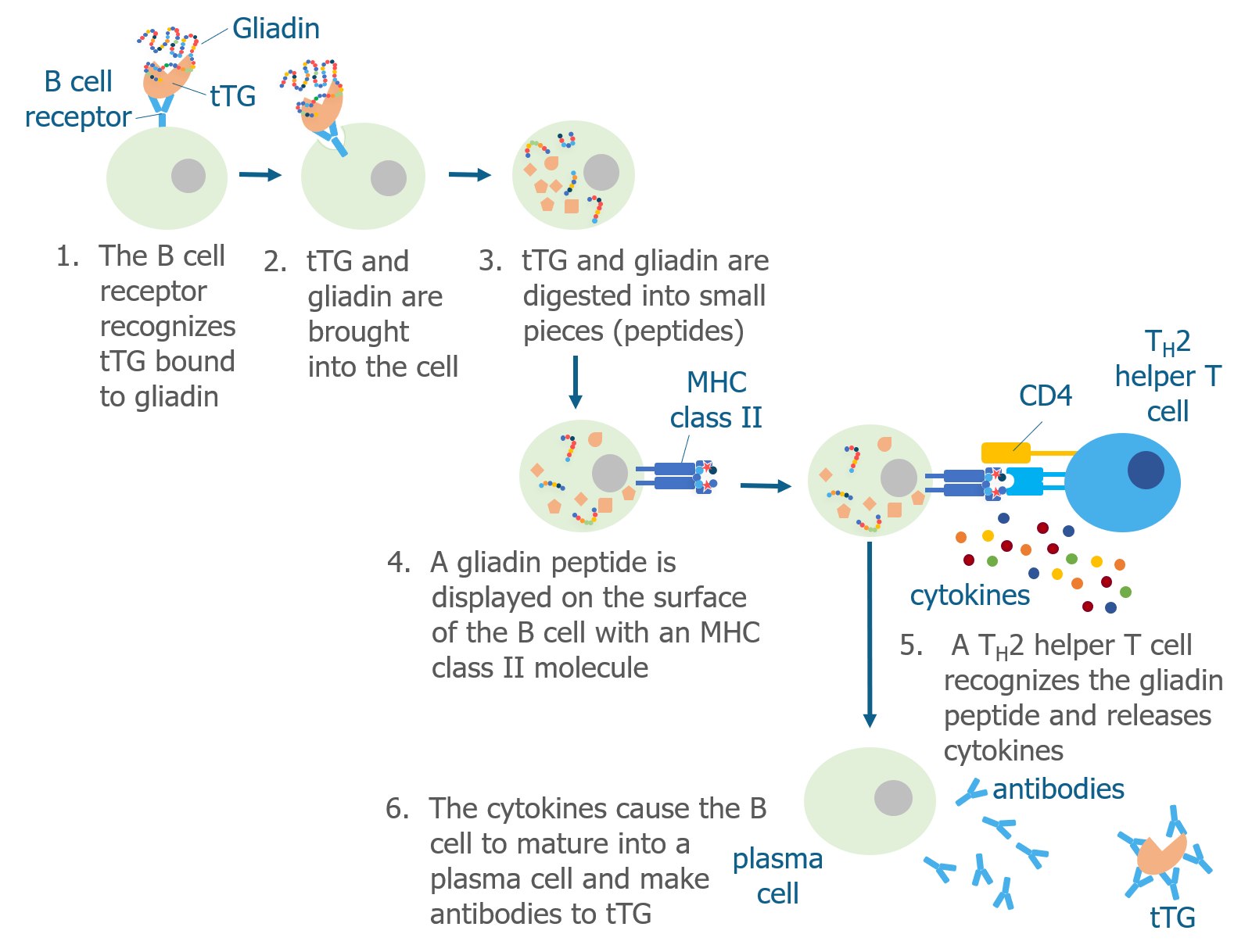
As we discussed above, tTG is the enzyme that is responsible for converting the glutamine amino acids into glutamate amino acids to produce deamidated gliadin peptides, which have increased immunogenicity. In addition to changing glutamines to glutamates, tTG can also cross-link the gluten peptide to itself.

Researchers are still trying to understand exactly how gluten causes B cells to make antibodies that recognize tTG, but they think that B cells ingest tTG that is cross-linked to a gliadin peptide. Then, Th2 helper T cells that recognize gliadin help B cells produce antibodies to tTG.


<< PREVIOUS                                                                                                                                         NEXT >>

REFERENCES
  1. Mesin L, Sollid LM, Di Niro R. The intestinal B-cell response in celiac disease. Front Immunol. 2012;3:313.
  2. Chorzelski TP, Sulej J, Tchorzewska H, Jablonska S, Beutner EH, Kumar V. IgA class endomysium antibodies in dermatitis herpetiformis and coeliac disease. Ann N Y Acad Sci. 1983;420:325-334.
  3. Dieterich W, Ehnis T, Bauer M, et al. Identification of tissue transglutaminase as the autoantigen of celiac disease. Nat Med. 1997;3(7):797-801.
GLOSSARY

Antibodies – Y-shaped proteins that recognize foreign pathogens. Made by B cells. Also called immunoglobulins.

B cell – A type of adaptive immune cell. Also called B lymphocyte.

Endomysium – A type of connective tissue.

Enzyme – A protein that can change one type of molecule to another.

Gliadin – One of the wheat proteins that forms gluten. Responsible for triggering an immune response in patients with celiac disease.

Gluten – A type of protein found in cereal grains. Wheat gluten is made of two proteins called gliadin and glutenin.

Helper T cell – Adaptive CD4+ immune cell that produces cytokines when activated.

Immunogenicity – The ability of an antigen to induce an immune response.

T cell – A type of adaptive immune cell. Also called T lymphocyte.

Tissue transglutaminase (tTG) – An enzyme that deamidates gliadin peptides causing them to be more immunogenic. Also the target of auto-antibodies in patients with celiac disease.


RELATED

Share this Post

B Cells

We’ve talked a lot about T cells and MHC proteins and how they recognize gluten. But B cells also play a key role in celiac disease.

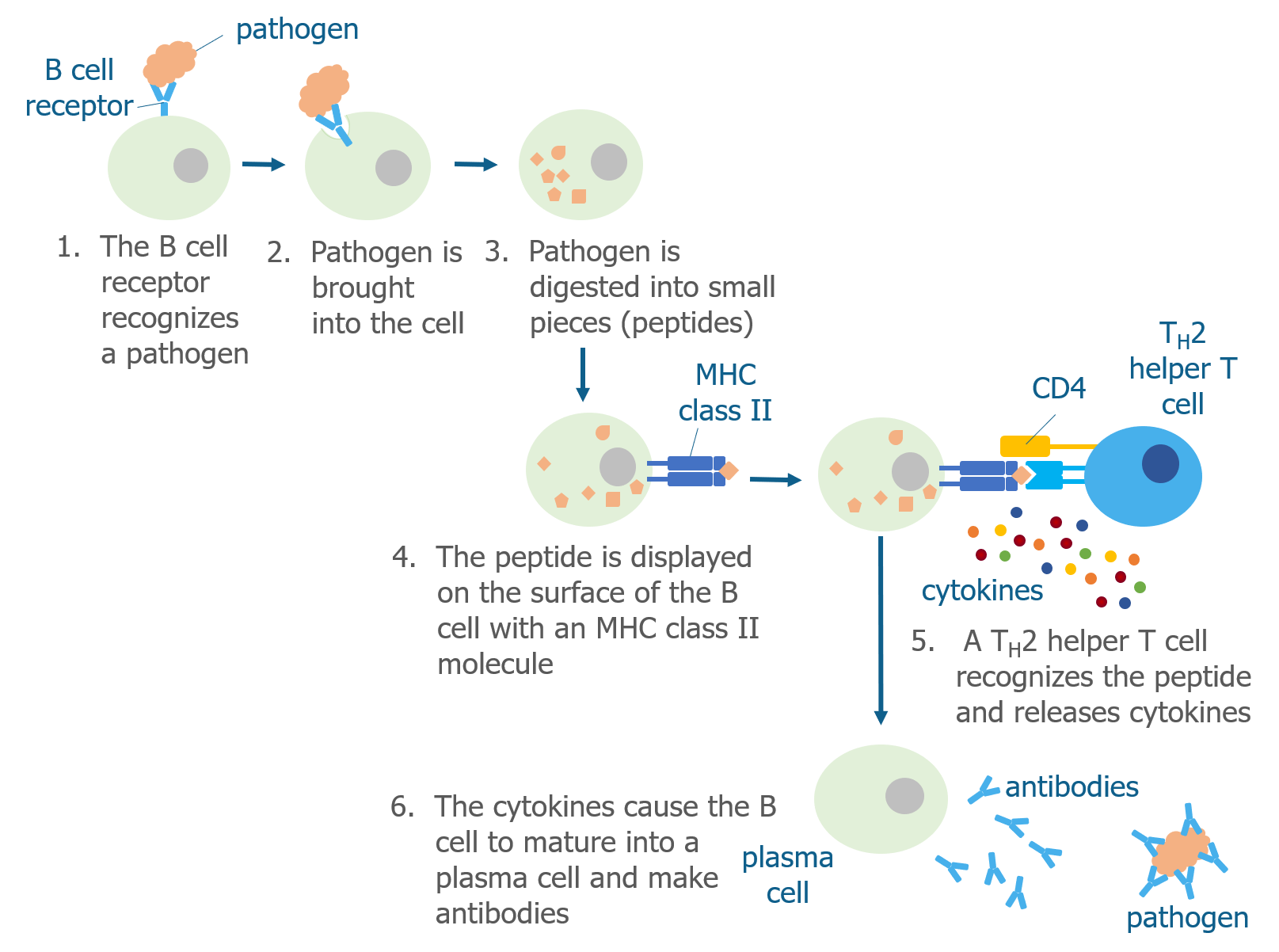
Like T cells, B cells have receptors (B cell receptor or BCR) on their surfaces that recognize specific pathogens. Unlike T cells, they do not need antigen presenting cells to display a pathogen peptide for them—they are able to recognize pathogens on their own. Each B cell has a unique type of B cell receptor that is capable of recognizing only a few antigens.

When a B cell bumps into a pathogen that it recognizes, it brings the whole pathogen into the cell and digests it into peptides. As discussed above, B cells are antigen presenting cells and display pathogen peptides on their surface in complex with an MHC class II molecule. They do this because they need the help of Th2 helper T cells to become activated. Th2 helper T cells that have already recognized the same pathogen (by interacting with other antigen presenting cells) are able to recognize the antigen displayed by the B cell. When this happens, Th2 cells produce cytokines that cause the B cell to mature into a plasma cell

The main role of plasma cells is to produce proteins called antibodies (also known as immunoglobulins), which are Y-shaped proteins that recognize the same pathogen that the B cell originally recognized. Plasma cells release these specific antibodies into the surrounding tissue where they find and stick to the pathogen.

By doing this, antibodies stop the pathogen from spreading and mark it for destruction by other immune cells. This type of immune response is often called the antibody-mediated immune response.

There are five main classes of antibodies—IgA, IgD, IgE, IgG, and IgM—each of which have different roles. Two of these classes, IgA and IgG, can be found at high levels in blood samples.

How Are B Cells Involved in Celiac Disease?

In the 1980s, researchers discovered that patients with celiac disease had high levels of antibodies that recognized gliadin (a protein in gluten) in their small intestine.1 Patients with celiac disease were also found to have auto-reactive antibodies—that is, antibodies that recognize normal “self” proteins.

Researchers developed a blood test that was able to detect IgA antibodies that recognized a type of tissue called endomysium.2 In 1997, Dr. Detlef Schuppan and his team discovered that IgA antibodies in the blood of patients with celiac disease recognized a specific protein in the endomysium—a protein called tissue transglutaminase (tTG).3 The antibodies to gliadin, endomysium, and tTG disappear when patients adopt a gluten-free diet, which suggests that these antibodies are made as part of an immune response to gluten.

We know that T cells can recognize deamidated gliadin peptides and begin an immune response, so it makes sense that B cells might produce antibodies to gliadin if they mistakenly recognize it as a pathogen. But why would B cells produce antibodies to tTG, a normal protein in the body?

As we discussed above, tTG is the enzyme that is responsible for converting the glutamine amino acids into glutamate amino acids to produce deamidated gliadin peptides, which have increased immunogenicity. In addition to changing glutamines to glutamates, tTG can also cross-link the gluten peptide to itself.

Researchers are still trying to understand exactly how gluten causes B cells to make antibodies that recognize tTG, but they think that B cells ingest tTG that is cross-linked to a gliadin peptide. Then, Th2 helper T cells that recognize gliadin help B cells produce antibodies to tTG.

REFERENCES
  1. Mesin L, Sollid LM, Di Niro R. The intestinal B-cell response in celiac disease. Front Immunol. 2012;3:313.
  2. Chorzelski TP, Sulej J, Tchorzewska H, Jablonska S, Beutner EH, Kumar V. IgA class endomysium antibodies in dermatitis herpetiformis and coeliac disease. Ann N Y Acad Sci. 1983;420:325-334.
  3. Dieterich W, Ehnis T, Bauer M, et al. Identification of tissue transglutaminase as the autoantigen of celiac disease. Nat Med. 1997;3(7):797-801.
GLOSSARY

Antibodies – Y-shaped proteins that recognize foreign pathogens. Made by B cells. Also called immunoglobulins.

Antibody-mediated immune response – An immune response that involves the production of antibodies. Also known as the humoral immune response.

Antigen – A protein that is recognized by an immune cell receptor and triggers an immune response.

Antigen presenting cell – A specialized immune cell that presents peptides to CD4+ or CD8+ T cells. Peptides are presented by MHC I or MHC II proteins.

B cell – A type of adaptive immune cell. Also called B lymphocyte.

Cytokines – Small proteins that are made and released by immune cells. Allows cells to send signals and provide instructions to other cells.

Endomysium – A type of connective tissue.

Enzyme – A protein that can change one type of molecule to another.

Gliadin – One of the wheat proteins that forms gluten. Responsible for triggering an immune response in patients with celiac disease.

Gluten – A type of protein found in cereal grains. Wheat gluten is made of two proteins called gliadin and glutenin.

Helper T cell – Adaptive CD4+ immune cell that produces cytokines when activated.

Immunogenicity – The ability of an antigen to induce an immune response.

MHC class I protein – Major histocompatibility complex class I protein. Found on the surface of normal cells. Presents peptides to CD8+ T cells.

MHC class II protein – Major histocompatibility complex class II protein. Found on the surface of antigen presenting cells. Presents peptides to CD4+ T cells.

Pathogens – Bacteria and viruses that can cause disease.

Peptide – A small protein fragment consisting of a chain of amino acids.

Plasma cell – Mature B cell that can produce antibodies.

T cell – A type of adaptive immune cell. Also called T lymphocyte.

Tissue transglutaminase (tTG) – An enzyme that deamidates gliadin peptides causing them to be more immunogenic. Also the target of auto-antibodies in patients with celiac disease.

Share this Post

What Role Does Tissue Transglutaminase (tTG) Play in Celiac Disease?

In addition to HLA-DQ2 and HLA-DQ8 haplotypes, an enzyme called tissue transglutaminase or tTG (also known as transglutaminase 2 or TG2) also influences how gliadin peptides are presented to CD4+ T cells.

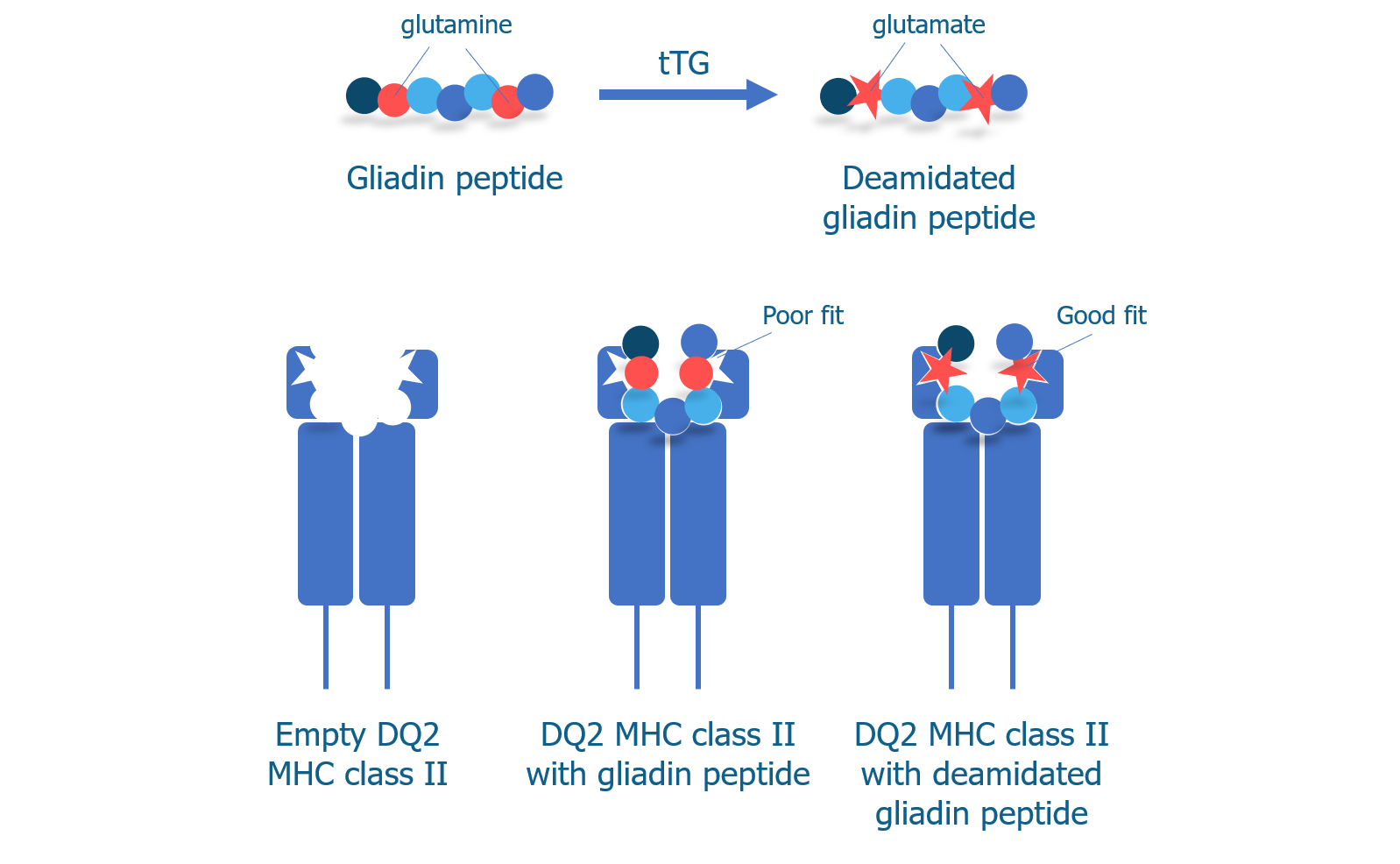
You may have heard of tTG because of the tTG-IgA test, which is used by many doctors when testing for celiac disease.1  tTG is a multifunctional enzyme—a protein that can change one type of molecule to another.  In celiac disease, the enzyme tTG changes an amino acid called glutamine into another amino acid called glutamate through a chemical reaction called deamidation.

As we discussed above, gliadin (one of the proteins in gluten) has a many glutamine amino acids. When these glutamines are changed to glutamates, the properties of the gliadin peptide change as well. Deamidated gliadin fits better than non-deamidated gliadin in the grooves of the DQ2/DQ8 MHC class II protein. Because it fits better, the MHC class II proteins present deamidated gliadin more efficiently to CD4+ T cells, which results in enhanced immunogenicity (a stronger the immune response).

So far, we have learned how CD4+ T cells can mistakenly recognize gliadin peptides and initiate an immune response:

  • Gliadin (a protein in gluten) is not completely digested in the intestine
  • Gliadin peptides are deamidated by tissue transglutaminase (tTG)
  • Deamidated gliadin peptides are presented as antigens by HLA-DQ2 or HLA-DQ8
  • CD4+ T cells recognize the deamidated gliadin peptide as a threat and begin an immune response

In addition to T cells, there is another type of immune cell that plays an important part in celiac disease. We will talk about B cells and antibodies in the next section.

NEXT TOPIC: How are B cells involved in celiac disease?

BACK TO MAIN PAGE

REFERENCES
  1. Rubio-Tapia A, Hill ID, Kelly CP, Calderwood AH, Murray JA, American College of G. ACG clinical guidelines: diagnosis and management of celiac disease. Am J Gastroenterol. 2013;108(5):656-676.
GLOSSARY

Antibodies – Y-shaped proteins that recognize foreign pathogens. Made by B cells. Also called immunoglobulins.

B cell – A type of adaptive immune cell. Also called B lymphocyte.

CD4 – A co-receptor on the surface of helper T cells.

Cytokines – Small proteins that are made and released by immune cells. Allows cells to send signals and provide instructions to other cells.

Deamidation – A chemical reaction that can convert a glutamine amino acid to a glutamate amino acid.

Enzyme – A protein that can change one type of molecule to another.

Gliadin – One of the wheat proteins that forms gluten. Responsible for triggering an immune response in patients with celiac disease.

Gluten – A type of protein found in cereal grains. Wheat gluten is made of two proteins called gliadin and glutenin.

Haplotype – Variations in HLA genes that produce different MHC class II proteins.

Immunogenicity – The ability of an antigen to induce an immune response.

MHC class II protein – Major histocompatibility complex class II protein. Found on the surface of antigen presenting cells. Presents peptides to CD4+ T cells.

T cell – A type of adaptive immune cell. Also called T lymphocyte.

Tissue transglutaminase (tTG) – An enzyme that deamidates gliadin peptides causing them to be more immunogenic. Also the target of auto-antibodies in patients with celiac disease.

Share this Post

What Does it Mean to Be Genetically Predisposed?

So, if gliadin is only partially digested when we eat it, and gliadin peptides are able to activate T cells, why doesn’t everyone who eats gluten develop celiac disease?

As described above, MHC class II proteins display peptides on the surface of antigen presenting cells for CD4+ T cells to recognize. There are 3 major types of MHC class II proteins: HLA-DP, HLA-DQ, and HLA-DR.

Of these 3 main MHC class II proteins, the HLA-DQ type is known to be involved in celiac disease.

All proteins have corresponding genes that provide the instructions to make them. The genes for MHC class II proteins are found on one of our chromosomes in a region known as the human leukocyte antigen (HLA) gene complex.

Each MHC class II protein is made up of two subunits (or parts), alpha and beta, that work together as a pair. The HLA-DQ protein is made of alpha and beta subunits encoded by the HLA-DQA1 and HLA-DQB1 genes.

The HLA-DQA1 and HLA-DQB1 genes are not the same in every person. These genes are polymorphic, which means they are variable from person to person and produce proteins that are slightly different from one another. These variations (called haplotypes) affect the way MHC class II proteins interact with the antigens they display and can determine whether or not CD4+ T cells recognize that antigen and begin an immune response. Certain MHC haplotypes cause some antigens (the “key”) to fight more snuggly within the T cell receptor (the “lock”). The better the fit, the stronger the immune response.

Most people with celiac disease have either the DQ2 or DQ8 haplotype.1 These haplotypes of MHC class II are able to present gliadin peptides to CD4+ T cells in a way that initiates an immune response.2

Why doesn’t everyone with HLA-DQ2 or HLA-DQ8 develop celiac disease?

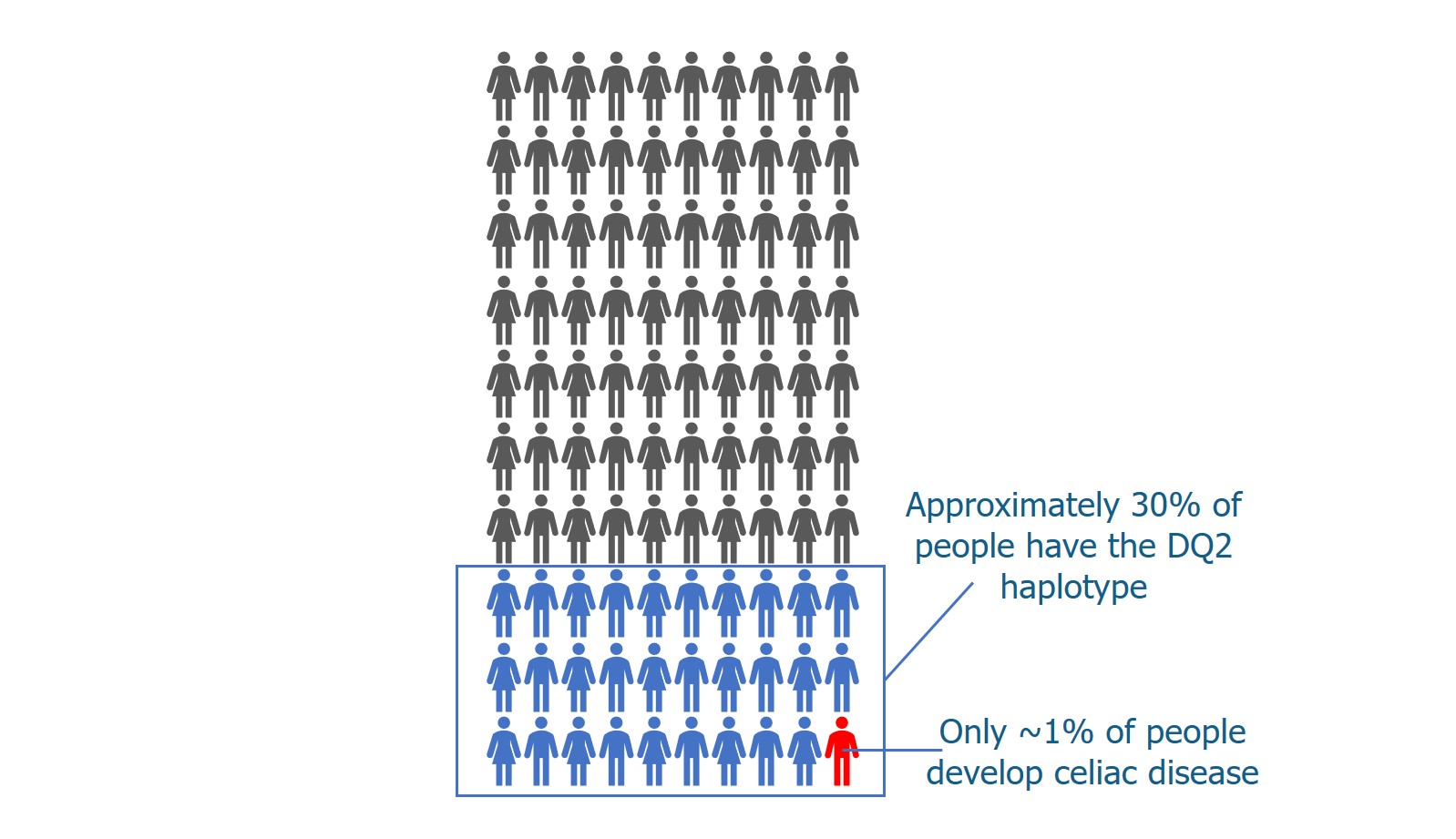
Approximately 30% of the population (3 of every 10 people) has the DQ2 haplotype, yet only about 1% (1 of every 100) will develop celiac disease.1-3 Genetic testing for HLA-DQ2 or HLA-DQ8 can tell us who is predisposed (at risk) for developing celiac disease, but it currently can’t tell us who will develop the disease, or when it might be triggered.

Researchers are trying to identify other factors that are involved in triggering celiac disease. They are studying whether things like other genes, our environment, bacteria that normally live in our gut (our microbiome), or previous infections may play a role.

NEXT TOPIC: What role does tissue transglutaminase play in celiac disease?

BACK TO MAIN PAGE

REFERENCES
  1. Gujral N, Freeman HJ, Thomson AB. Celiac disease: prevalence, diagnosis, pathogenesis and treatment. World J Gastroenterol. 2012;18(42):6036-6059.
  2. Singh P, Arora A, Strand TA, et al. Global Prevalence of Celiac Disease: Systematic Review and Meta-analysis. Clin Gastroenterol Hepatol. 2018.
  3. Fasano A, Berti I, Gerarduzzi T, et al. Prevalence of celiac disease in at-risk and not-at-risk groups in the United States: a large multicenter study. Arch Intern Med. 2003;163(3):286-292.
GLOSSARY

Antigen – A protein that is recognized by an immune cell receptor and triggers an immune response.

Antigen presenting cell – A specialized immune cell that presents peptides to CD4+ or CD8+ T cells. Peptides are presented by MHC I or MHC II proteins.

Gliadin – One of the wheat proteins that forms gluten. Responsible for triggering an immune response in patients with celiac disease.

Gluten – A type of protein found in cereal grains. Wheat gluten is made of two proteins called gliadin and glutenin.

Haplotype – Variations in HLA genes that produce different MHC class II proteins.

HLA gene complex – Human leukocyte antigen (HLA) gene complex is a region on our chromosomes that contains the genes that produce MHC class II proteins.

HLA-DQ – The HLA haplotype that is associated with celiac disease.

MHC class II protein – Major histocompatibility complex class II protein. Found on the surface of antigen presenting cells. Presents peptides to CD4+ T cells.

Peptide – A small protein fragment consisting of a chain of amino acids.

Polymorphic – Variable from person to person.

Receptor – A protein that is located on the surface of a cell and interacts with other proteins. Receptors act as the “locks” that recognize specific pathogen “keys”.

T cell – A type of adaptive immune cell. Also called T lymphocyte.

Share this Post