
Does Pregnancy Induce Celiac Symptoms? Researchers Are Trying to Find Out

A study team at Beth Israel Deaconess Medical Center led by Dr. Amelie Therrien is conducting a study that aims to observe, understand and determine the frequency of celiac-related symptoms and the impact on the quality of life in patients living with celiac disease during their pregnancy and the postpartum period.
You are invited to participate in this study if you are a woman with an established celiac disease diagnosis who has been following a gluten-free diet for at least 12 months. We are enrolling some women with celiac disease who are pregnant and some women who are not currently pregnant. Women who are currently pregnant and don’t have a celiac disease diagnosis may also be eligible for the study.
If you choose to participate in the study, you will be asked to complete a survey and provide stool samples at specific time points. For more information, please contact cdpreg@bidmc.harvard.edu
Food Label Modernization Act of 2021

TAKE ACTION – Join us, the Celiac Disease Foundation and the entire GF community in supporting the Food Labeling Modernization Act of 2021.
This bill would require that all gluten-containing grains (wheat, rye, AND barley) be clearly labeled on food packaging, making it easier and safer for individuals with celiac disease to purchase food items. Current food labels do not provide the simple, straightforward information that celiac patients need to evaluate products and make healthy choices.
Please take ONE MINUTE to contact your Members of Congress, using the Celiac Disease Foundation’s simple, pre-populated form, encouraging their support of this important bill.
Click here to learn more about this bill.
Ask the Experts – August 2021

This month’s “Ask the Expert” features both Dascha Weir, MD, Associate Director, The Celiac Disease Program, Boston Children’s Hospital and Tara McCarthy, MS, RD, LDN, Clinical Nutrition Specialist, Boston Children’s Hospital. Tara offers guidance about setting up your kitchen in a new home. Dr. Weir talks about testing when you have both celiac disease and type 1 diabetes in the family.
Question – We are about to move. Before we set-up and start to use the kitchen I intend to do a thorough cleaning. I want to make sure I clean up any gluten residue from the family who last lived here. Is it necessary to get new appliances (oven and fridge) because of possible gluten residue? Or is a thorough cleaning sufficient?
Tara McCarthy – Congratulations on your move! Moving is hard and setting up a kitchen takes time. It is important to avoid cross contact in all situations. We would suggest cleaning down all surfaces inside and out and that includes the fridge and oven but you do NOT need to buy new appliances. This is a fresh start so it would be nice to organize your new kitchen so that gluten free foods are separate from gluten containing foods. Cleaning cabinets inside and out as well as all counter surfaces should also be included in your cleaning and set up plan. Everyone in the family should be aware of the process you set up in your kitchen and including the person with celiac while making decisions gives them a sense of control and belonging.
Question – I have once child with Type 1 diabetes (T1D) and one child with celiac disease (CD). I know that both conditions are autoimmune. Should I be testing the child with CD for T1D and the child with T1D for CD?
Dr. Weir – Both celiac disease and type 1 diabetes mellitus are autoimmune diseases. Generally, a person with one autoimmune disease is at somewhat higher risk for developing another autoimmune disease.
In children with celiac disease, autoimmune thyroid disease and type 1 diabetes are the most common overlapping autoimmune conditions. While most children with celiac disease will not develop another autoimmune condition, gastroenterologists monitor their patients with celiac disease for signs or symptoms of these conditions by asking screening questions about both conditions, carefully following a child’s growth and periodically checking thyroid function tests.
Likewise, pediatric endocrinologists caring for children with type 1 diabetes routinely order bloodwork screening for celiac disease. Approximately 5% of patients with type 1 diabetes also have celiac disease. Most of these children have either asymptomatic celiac disease or symptoms that are mild. Many will have undetected celiac disease at the time of their diabetes diagnosis. The celiac diagnosis is usually made within 6 years of the diabetes diagnosis. In children with both celiac disease and type 1 diabetes, only 1 in 6 (17%) will be diagnosed with celiac disease before type 1 diabetes.
So, a child with type 1 diabetes should be screened for celiac disease with blood tests. And a child with celiac disease should be monitored for clinical signs of type 1 diabetes. Remember, non-diabetic siblings of a child with celiac disease should also be screened for celiac disease with blood tests approximately every 3 years or sooner if concerning symptoms arise.
504 Form

Accommodations for a child with celiac disease should be documented within the context of tailored 504 plan to help promote health, while minimizing the risk of social stigmatization or exclusion from classroom wide activities to which other peers have access.
There is a template 504 plan available to assist schools with developing plans for a child with celiac disease. You can download this template below.
Make a difference. Make a connection. Become a volunteer.

Have you ever considered helping others with celiac disease? Are you interested in meeting others while providing service to the gluten-free community? One way to help is by joining one of our committees. These committees focus on specific goals, events or developing resources for our member families. We have committees focused on food insecurity, event planning, welcoming new families and more.
Anyone is welcome to serve on these committees.
The committees are:
Awareness and Advocacy – This group’s focus is to raise awareness and participate in advocacy for celiac disease and celiac research at the local, state and federal level. We meet the fourth Friday of the month at 3:30 pm
Communications/Social Media – This group’s focus is all of the ways we communicate such as newsletters, social media, website and more. We will ensure that those tools are working well for our group and our members. We meet on the third Tuesday of the month at 7:30 pm.
Food Insecurity – This group’s focus is helping families in need and educating service providers (like food banks and shelters) about the gluten-free diet. We meet the first Monday of the month at 11 am and the third Friday of the month at 3:30 pm.
Fundraising – This group is focused on raising funds to support the work of Celiac Kids Connection and the Celiac Program at Boston Children’s Hospital. We meet the second Friday of the month at 11 am
Membership Connection /Social Events – This group plans our events like the Holiday Party and Celiac Smarts. We also will be planning smaller group events based on specific regions or ages. We work with our mentoring program, our Pen Pal program and other avenues of member support. We meet on the fourth Wednesday at 7:30 pm.
Welcome New Members- This group is focused on assisting new families learn to live with celiac disease and the gluten-free diet. Assuring that new families know all of the ways CKC can help. We meet on the first Wednesday at 1:30 pm.
If you are interested in helping with any of these committees in a small or large way, please contact us. If you are interested in one of these committees but are unable to attend the meetings, we are happy to talk with you about how you can support the group’s efforts with specific tasks
Ask Tara McCarthy, MS, RD, LDN – June 2021
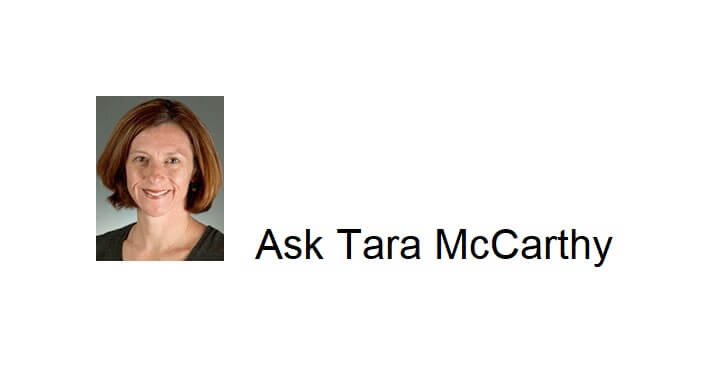
This month’s “Ask the Expert” features Tara McCarthy, MS, RD, LDN, Clinical Nutrition Specialist, Boston Children’s Hospital. Tara answers questions about multi vitamins and strawberries.
Question – My pediatrician thinks my daughter should be taking a multivitamin plus iron. Do you have a recommendation for a gluten-free children’s multivitamin?
Tara McCarthy – This is a very common question for dietitians. Celiac Disease can cause damage to intestinal villi which is where many vitamins and minerals are absorbed. Some patients are diagnosed with celiac disease after the diagnosis of iron deficiency anemia. We recommend a multivitamin for patients newly diagnosed with celiac disease. In the United States, wheat products are fortified with B vitamins, therefore when you avoid gluten you may be missing out on these extra vitamins. Of note, many gummy multivitamins do not have adequate B vitamins so be sure to check the label. The recommendation would be a chewable vitamin or one the child can swallow as these are usually more complete. We all know that children do not always eat the perfect diet especially in the early phases of celiac disease because the child may have symptoms that influences what they eat. As a rule of thumb, if a child eats 5 different fruits and vegetables daily, has a good variety of grains and whole natural foods which contain iron then, then they may not need a multivitamin. If your child struggles in any of these areas, consider the multivitamin as a safety net. The most important information is for any multivitamin or supplement to say GLUTEN-FREE on the label.
For these reasons, lack of diet variety, damaged villi and vitamins missing in the gluten-free diet, many children with celiac disease may benefit from a chewable multivitamin with iron. It is always important to meet with a registered dietitian who specializes in celiac to look at your child’s specific intake. My recommendation is always a chewable multivitamin that says gluten-free on the label and has close to 100% of all the vitamins and minerals. My current go to recommendation is Target brand Up and Up multivitamin.
(Note: Flintstones has changed its formulation and is no longer gluten-free).
Question – Strawberries are in season and my kids have always loved strawberry picking. Since my son’s diagnosis of celiac disease, I am concerned about strawberries and strawberry picking. I have read that strawberries are grown on straw and most often wheat straw. Is this true? And if yes, is this a problem for gluten cross-contact in eating strawberries?
Also, is it a concern being in the strawberry field picking the strawberries and coming into contact with the wheat straw?
Tara McCarthy – Just last week I noticed my strawberries were labelled gluten-free and thought this was hysterical, because of course strawberries are gluten-free. So, I looked more into this and the name is “strawberries” because these are berries that were originally grown on straw. Straw and hay are often used interchangeably. Straw is the stalk of the plant left over after the grain has been harvested, the gluten is in the grain. Hay is harvested before the seed (which contains gluten) is made. Today, not all strawberries are grown on straw. Plus, the wheat is in the grain kernel and not the straw part of the plant. Our recommendation would be to not worry about gluten contamination in fresh strawberries. Always wash your berries before you eat them and always wash your hands before you eat anything. Strawberry picking is a great activity that we would encourage in the celiac community.
Are you eating gluten free and still experiencing symptoms?

If your child continues to experience symptoms after 6 to 12 months on the gluten-free diet and is between the ages of 12 and 18 we have and exciting research opportunity to talk to you about.
The Celiac Disease Patient-Reported Outcome (CeD PRO) Measures study is a one-time, telephone interview and will last approximately 60-90 minutes of your time.
To learn more about the study and what it means to participate, please review this outline.
Talking about Celiac Disease

By Abby Baird, Teen Board Member
I’m Abby B, a junior who has had Celiac for almost three years now. I play multiple sports and go to a small private Christian school, meeting in person, despite Covid-19. I got diagnosed with Celiac Disease when I was in 8th grade and have had it for three years now. Since I go to such a small school I am the only one in the high school that has Celiac Disease and the only one who must eat strictly gluten-free, which is hard because many people and teachers don’t know or remember that I am gluten-free. With life starting to return closer and closer to normal, I would like to talk about some of the struggles of hanging out with friends while having Celiac Disease.
When I first got diagnosed with Celiac Disease I was confused and scared about what this would mean for me and how it would change my life. I found that it was hard for me to think about telling my friends what was going on, that they would end up seeing me for what my problems are and not for who I am. Eventually once I was officially diagnosed I told all my friends and they were so supportive and immediately asked what they could do to help me. Three years later I still have those exact same friends and it has definitely gotten easier, but that does not mean that living and eating out with friends is easy.
The first piece of advice that I would give anyone who has to face trying to tell all their friends about having Celiac Disease, is just to be honest. Don’t try to downplay what your disease is or how it affects you but instead tell them exactly how you feel and what it does to you. This ensures that you have not only told your friends what is wrong, but you have also communicated how serious this autoimmune disease is. It is not an easy thing to have to tell all your friends, but they should understand and they should want to help you through this.
Secondly once you have told your friends that you have Celiac Disease, communicating with your friends about your needs is crucial. Instead of trying to fit in, you need to speak up for yourself and tell your friends about your needs and what you can and can’t do when it comes to food. It is definitely something that is abnormal for a teenager to have to do and it is not an easy thing, but in the end making sure that you are eating safe is so much better for you than trying to fit in.
Lastly I just want to stress how important confidence is in all of this. Being a teenager is already stressful enough and to have something else added into the mix can make it so much worse. I have found over the three years that I have had Celiac Disease that being confident in what I can and cannot eat, or what Celiac Disease is, has been so helpful. There are always going to be people who think they know what you are going through, or try to tell you that you are wrong, confidence is key in those situations. Being sure of what you know to be true can be so helpful for not only you but for your friends as well.
Life with Celiac Disease definitely has its ups and downs, but if you are able to have your friends try to help you, it can be made so much easier.
Ask Dr. Weir – May 2021

This month’s “Ask the Expert” features Dr. Dascha Weir, MD, Associate Director, The Celiac Disease Program, Boston Children’s Hospital. Dr. Weir answers questions about testing siblings for celiac disease and other health monitoring issues.
Question – My 6 year-old was diagnosed with celiac disease 2 years ago. He does great on the gluten-free diet and his health and growth have improved so much. My 1 year-old is showing some of the same symptoms we saw with my older child before his diagnosis. Should I have my 1 year-old tested for celiac disease?
Dr. Weir – Siblings of children with celiac disease are at higher risk of developing celiac disease. Because of this risk, all siblings of children with celiac disease should be screened with blood work (a total IgA and tissue transglutaminase IgA) at the time of their brother/sister’s diagnosis. Repeat testing every 3 years through childhood and adolescence is then advised. Typically, we don’t recommend sending the blood work until after the age of 2 years. However, when a sibling is showing concerning signs or symptoms sooner than 3 years from the last screening tests or before 2 years of age, we recommend screening for celiac disease at that time. Remember, if a child isn’t consuming gluten regularly, these tests may not show up with positive results even in the setting of celiac disease.
Question – Are there other health issues closely related to celiac disease that I should be asking my pediatrician to monitor for in my child?
Dr. Weir – Pediatricians and gastroenterologists work as a team to promote health and monitor for problems in the children in their care. There are some specific health issues that we see more frequently in children with celiac disease though, fortunately, most kids won’t develop them. Children with celiac disease are at risk of developing other autoimmune diseases, such as thyroid conditions and type 1 diabetes. Research has also suggested that children with celiac disease have increased risk of psychiatric issues such as depression, anxiety, eating disorders and behavioral disorders. It is important to pay close attention to both the physical and mental health of all children, but especially kids who have celiac disease.